

Remodeling your home in Tyler, Texas can dramatically improve comfort, functionality, and property value—but only if the project complies with local building regulations. Many homeowners are surprised to learn that even “simple” upgrades can require a permit under the City of Tyler Building Services, the International Residential Code (IRC), the National Electrical Code (NEC), and the International Plumbing Code (IPC).
Starting work without the proper permit can lead to fines, stop-work orders, failed inspections, insurance issues, and even the forced removal of newly completed work.
This guide breaks down exactly when a remodel requires a permit in Tyler, why, and what the relevant codes actually say.
Why Permits Matter in Tyler, TX
Remodel permit legal compliance
The City of Tyler Building Services states:
“A permit is required for any construction, alteration, repair, movement, or change in occupancy of a building or structure.”
If work falls under this definition—which most electrical, plumbing, or structural changes do—you must obtain a permit before beginning the project.
Avoiding fines and penalties
Unpermitted work can lead to:
- Stop-work orders
- Reinspection fees
- Demolition of non-compliant work
- Delays in property sales
Protecting home value and insurance coverage
Insurance companies may deny claims related to unpermitted work.
Additionally, home inspectors routinely flag unpermitted remodeling during resale.
When a Remodel Definitely Requires a Permit
Below are the most common remodeling activities that require a permit in Tyler, supported by direct code references.
1. Remodel Permit Structural Changes (IRC R301–R602)
Any modification affecting the building’s structure automatically triggers a permit.
These projects require a permit:
- Removing or altering load-bearing walls
- Adding beams or columns
- Modifying the roof structure
- Changing foundation components
- Enlarging window or door openings
- Adding or removing major framing members
Relevant Code Citations
IRC R301.1 – Structural Design:
“Structural members and systems shall be designed and constructed to safely support all loads.”
IRC R602 – Wood Wall Framing:
Provides specific requirements for studs, headers, bearing walls, and bracing.
If you are touching the structure, you are in permit territory—no exceptions.
2. Remodel Permit Adding or Moving Electrical Lines (NEC 210, 406, 680)
Electrical work is highly regulated in Tyler and almost always requires a permit.
Permit-required electrical changes:
- Adding new circuits
- Extending wiring to new rooms
- Moving outlets, switches, or fixtures
- Installing recessed lighting
- Updating the electrical panel
- Adding GFCI or AFCI protection in required areas
Relevant Code Citations
NEC 210.8 – GFCI Protection:
GFCI outlets are required in kitchens, bathrooms, laundry areas, garages, crawl spaces, and outdoors.
NEC 406.12 – Tamper-Resistant Receptacles:
Required in all dwelling unit areas.
If new wiring is installed or existing wiring is relocated, you must obtain a permit.
3. Plumbing Modifications (IPC Chapters 3–7)
Any change to the plumbing layout or drainage system requires a permit—even if the bathroom or kitchen footprint seems similar.
Permit-required plumbing changes:
- Adding new water lines
- Moving or replacing drains
- Relocating sinks, toilets, or showers
- Replacing or altering venting systems
- Installing new shower pans, bathtubs, or drain assemblies
Relevant Code Citations
“Drainage piping shall be sized and installed in accordance with this chapter.”
IPC 301.3 – Connections to drainage systems:
All new fixtures must be connected according to code.
If you’re opening walls or floors for plumbing, you need a permit.
4. Remodel Permit Moving or Removing Interior Walls (IRC R602–R603)
Even “non-structural” walls may contain electrical, HVAC, or plumbing components.
Permit-required wall work:
- Removing any wall
- Creating new room openings
- Adding or relocating framing
- Converting a room layout (e.g., open-concept)
- Widening doorways or hallways
Relevant Code Citations
IRC R602.3 – Design of Stud Walls:
Defines stud placement, load transfer, and fastening requirements.
IRC R603.1 – Non-Load-Bearing Wall Requirements:
Specifies minimum requirements for light-frame interior construction.
The City of Tyler generally requires a permit anytime a wall is removed or modified.
When You Do Not Need a Permit in Tyler, TX
Some cosmetic updates do not require a permit, including:
- Painting interior walls
- Replacing flooring (tile, laminate, carpet, hardwood)
- Installing cabinets (without moving plumbing)
- Replacing countertops
- Minor drywall patching
- Replacing plumbing fixtures in the same location
- Replacing light fixtures without altering wiring
If you’re not moving systems—or opening walls extensively—you may not need a permit.
City of Tyler Permit Requirements: Official Guidance
The City of Tyler requires permits for:
- Structural changes
- Electrical work
- Mechanical/HVAC work
- Plumbing work
- Any addition or remodeling that alters load paths, utilities, or egress
Source: City of Tyler Building Services.
How the Permit Process Works in Tyler, TX1. Submit Plans
Remodel permit typically includes:
- Floor plan
- Layout of electrical and plumbing modifications
- Structural drawings where applicable
2. Permit Approval
City officials review plans for code compliance.
3. Required Inspections
Common inspections include:
- Foundation (if applicable)
- Framing
- Rough electrical
- Rough plumbing
- HVAC rough-in
- Insulation
- Final inspection
Inspections must pass before work can continue.
Projects Frequently Flagged by Inspectors in Tyler
- Garage-to-living-space conversions
- Bathroom relocations
- New kitchens or kitchen reconfigurations
- Adding or removing interior walls
- Adding new HVAC vents or ducts
- Expanding window or door openings
- Installing new circuits or plumbing runs
These projects almost always require permits.
Penalties for Remodeling Without a Permit in Tyler, TX
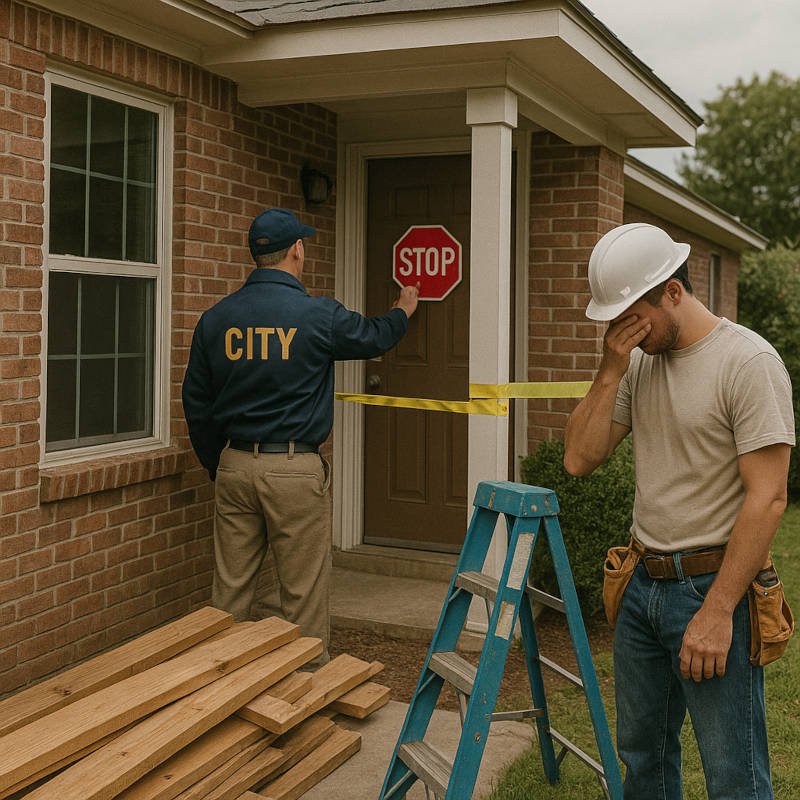
Homeowners who skip permits may face:
- Stop-work orders
- Fines
- Required demolition of unpermitted work
- Delays when selling the property
- Voided homeowners insurance coverage
In some cases, the city can require full restoration to the original condition.
Should You Pull the Permit—or Should Your Contractor?
In Tyler, your licensed contractor should pull permits.
This ensures:
- Code-compliant design and installation
- Accurate documentation
- Liability falls on the contractor, not the homeowner
- Smooth inspections
- Faster completion times
Reputable contractors avoid shortcuts.
If someone offers to work “without permits,” that is a red flag.
Why Homeowners Trust Jaime’s Construction & Remodeling LLC
- 20+ years of experience navigating Tyler’s permit system
- Licensed and insured professionals
- Expertise in structural, electrical, and plumbing compliance
- Clear communication and full project documentation
Whether you’re planning a kitchen upgrade, wall removal, bathroom remodel, or room addition, we ensure your project meets every code requirement.
Call (903) 245-5824 today for code-compliant remodeling in Tyler, TX.